Heavy duty gantry cranes are widely used in steel yards, shipyards, precast concrete plants, ports, power stations, and other industrial environments where large and heavy loads must be handled safely and efficiently. While much attention is often placed on lifting capacity, span, or structural design, power supply specifications are equally critical to crane performance, reliability, and long-term operating cost.
This article provides a comprehensive overview of heavy duty gantry crane power supply specifications, focusing on voltage, frequency, power delivery methods, electrical system design, environmental considerations, and compliance requirements. Understanding these factors is essential for selecting, designing, and operating gantry cranes with capacities ranging from tens to hundreds of tons.
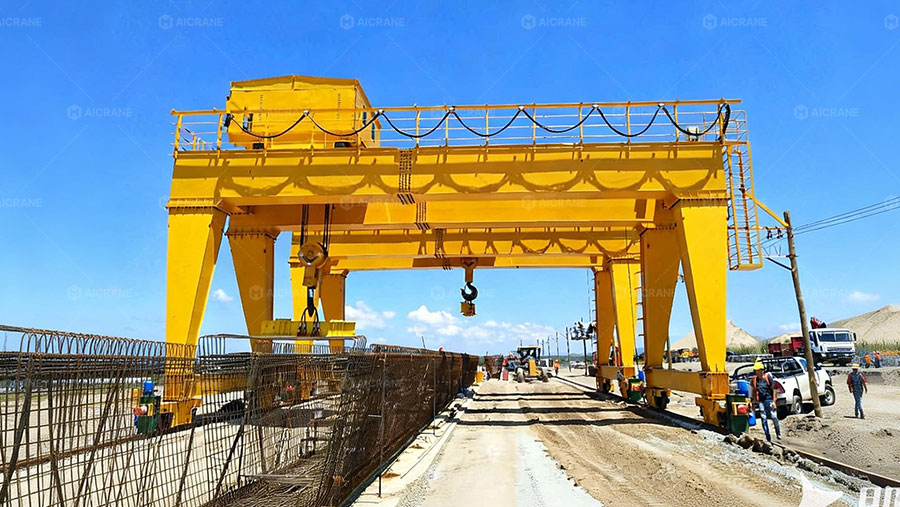
1. Importance of Power Supply Design in Heavy Duty Gantry Cranes
Power supply systems are the backbone of a gantry crane’s operation. They directly influence:
-
Hoisting and traveling performance
-
Motor efficiency and lifespan
-
Control accuracy and safety
-
Compatibility with site infrastructure
-
Operational stability under heavy load conditions
Unlike light duty gantry cranes, heavy duty cranes require high starting torque, stable voltage, and reliable current delivery, particularly during lifting, acceleration, and braking phases. Any mismatch between crane power requirements and site power conditions can lead to frequent faults, reduced productivity, or premature component failure.
2. Standard Power Supply Parameters
2.1 Rated Voltage
The most common rated voltages for heavy duty gantry cranes include:
-
380V / 400V / 415V – Common in Asia, Europe, and many international industrial sites
-
440V / 460V / 480V – Widely used in North America and heavy industrial plants
-
6kV or 10kV (Medium Voltage) – Used for very large gantry cranes with high total installed power
The selection of voltage depends on crane capacity, motor size, total installed power, and site power infrastructure. For gantry cranes above 100 tons, medium-voltage power supply may be adopted to reduce current levels and cable losses.
2.2 Frequency
Standard industrial frequencies include:
-
50 Hz – Common in Europe, Asia, Africa, and most global markets
-
60 Hz – Standard in North America and some regions in the Americas
Motors, inverters, braking units, and transformers must be designed specifically for the site frequency to ensure correct speed control and torque output.
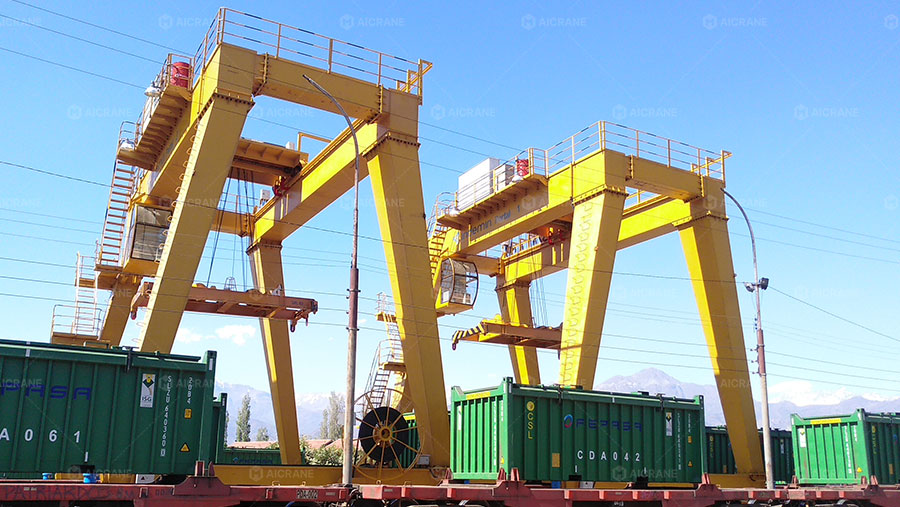
3. Power Supply Modes for Heavy Duty Gantry Cranes
3.1 Cable Reel Power Supply
Cable reel systems are commonly used for heavy duty rail gantry cranes with long traveling distances.
Key features:
-
Suitable for outdoor and long-span operations
-
Supports high current and stable power transmission
-
Can be spring-driven or motor-driven
Design considerations:
-
Cable cross-section must handle peak current during hoisting
-
Reel tension control is critical to prevent cable damage
-
Protection level (IP rating) must suit environmental exposure
Cable reels are widely applied in steel yards, shipyards, and precast yards.
3.2 Conductor Rail (Busbar) Power Supply
Conductor rail systems are used where stable, continuous power delivery is required with minimal mechanical wear.
Advantages:
-
Clean and compact installation
-
Suitable for high-duty cycle cranes
-
Lower maintenance compared to trailing cables
Limitations:
-
Requires precise installation and alignment
-
Protection against dust, moisture, and corrosion is essential
For heavy duty gantry cranes operating in fixed rail zones, enclosed conductor rails are often preferred.
3.3 Diesel Generator or Hybrid Power Supply
In remote or temporary sites where grid power is unavailable, heavy duty rubber tyred gantry cranes may be powered by:
-
Diesel generator sets
-
Diesel-electric hybrid systems
Typical applications:
-
Remote construction sites
-
Temporary precast yards
-
Emergency or backup power scenarios
Generator capacity must account for:
-
High starting currents
-
Simultaneous operation of hoist, trolley, and gantry travel
-
Voltage stability under fluctuating load
4. Total Installed Power and Load Calculation
Heavy duty gantry crane power supply design must consider the total installed power, which includes:
-
Hoisting motors
-
Trolley travel motors
-
Gantry travel motors
-
Auxiliary systems (cooling, lighting, control circuits)
However, cranes rarely operate all motors at full load simultaneously. Therefore, demand factors and diversity coefficients are applied during electrical design.
Key calculation factors include:
-
Maximum lifting load
-
Hoisting speed and duty class
-
Acceleration and braking requirements
-
Working class (A5–A8 or equivalent)
Accurate load calculation ensures sufficient power without excessive oversizing of electrical infrastructure.
5. Motor and Drive System Requirements
5.1 Motor Type Selection
Common motor types include:
-
Slip ring motors (traditional heavy-duty applications)
-
Squirrel cage motors with VFDs (modern designs)
For modern heavy duty gantry cranes, VFD-controlled motors are preferred due to:
-
Smooth acceleration and deceleration
-
Reduced mechanical stress
-
Improved energy efficiency
-
Precise speed control under heavy load
5.2 Starting Current and Voltage Drop Control
Heavy duty hoisting requires high starting torque. Without proper control, this can cause:
-
Excessive inrush current
-
Voltage drops affecting other equipment
-
Tripping of protection devices
VFDs, soft starters, and proper transformer sizing are used to manage starting current and maintain voltage stability.
6. Power Supply Protection and Safety Systems
A well-designed power supply system integrates multiple protection layers:
-
Overcurrent protection
-
Short-circuit protection
-
Overvoltage and undervoltage protection
-
Phase loss and phase imbalance protection
-
Grounding and earthing systems
Emergency power isolation devices and lockout systems are mandatory for heavy duty gantry cranes to meet industrial safety standards.
7. Environmental and Site-Specific Considerations
7.1 Outdoor and Harsh Environments
Heavy duty gantry cranes often operate outdoors, where power supply systems must withstand:
-
Temperature extremes
-
High humidity and rain
-
Dust, sand, or salt spray
-
Strong wind-induced cable movement
Electrical components typically require:
-
IP54–IP65 protection
-
UV-resistant cable jackets
-
Corrosion-resistant busbars and enclosures
7.2 Cold and Hot Climate Requirements
In cold climates:
-
Flexible low-temperature cables are required
-
Control cabinets may include heaters
In hot climates:
-
Adequate ventilation or air conditioning is necessary
-
Derating of electrical components may be required
8. Compliance with Standards and Regulations
Heavy duty gantry crane power supply systems must comply with relevant standards, such as:
-
IEC standards for electrical equipment
-
Local grid connection regulations
-
Industrial safety and grounding codes
-
EMC and electrical interference requirements
Compliance ensures safe operation, easier commissioning, and acceptance by local authorities and inspectors.
9. Energy Efficiency and Power Optimization
Modern heavy duty gantry cranes increasingly focus on energy-efficient power supply design, including:
-
Regenerative braking systems
-
Energy feedback to the grid
-
Optimized motor sizing
-
Intelligent power management systems
These measures reduce operating costs, improve sustainability, and enhance overall system performance.
10. Conclusion
Power supply specifications are a fundamental aspect of heavy duty gantry crane design and operation. From voltage and frequency selection to power delivery methods, motor control, protection systems, and environmental adaptation, each element directly impacts crane safety, reliability, and efficiency.
For engineers, project planners, and equipment buyers, understanding power supply requirements is essential when specifying or evaluating heavy duty gantry cranes. A properly designed power system not only ensures stable crane performance under extreme loads but also minimizes downtime, reduces maintenance costs, and supports long-term operational success.
In modern industrial applications, a heavy duty gantry crane is only as reliable as its power supply system – making this aspect a critical focus in any serious lifting project.